The first time I made coffee over an open fire in Wyoming, I did just about everything wrong. It was a fall morning out past Casper, cold enough that the water in the bottle had a skin of ice on it, and I dumped a fistful of grounds straight into a pot of creek water because that’s what I’d read the old cowboys did. What I got was closer to gritty mud than coffee. But here’s the thing: even half-ruined, black and chewy and scalding, that cup tasted like something. It tasted like it belonged to the place I was standing in.
I’ve thought about that morning a lot since. Because if you follow the coffee in this state back far enough, you don’t end up at an espresso machine or a bag of single-origin beans. You end up at a fire, a blackened pot, and a cook trying to keep a crew of tired men moving. Wyoming has a coffee culture that runs all the way from the chuckwagon to the corner roastery, and it’s one continuous thread. Let me walk you down it.
The Cowboy and His Pot of Coffee
On a nineteenth-century cattle drive, coffee wasn’t a luxury or a ritual. It was fuel, medicine, and morale all at once. Cowhands worked brutal hours in brutal weather, and the one dependable comfort waiting for them before sunup was a cup of coffee strong enough to stand a spoon in. The chuckwagon cook — the cookie, the outfit’s most important man after the trail boss — was the keeper of the coffee pot, and a good one kept it going more or less around the clock.
The method was as simple as it gets, which is exactly why it worked out on the range with no equipment to speak of. You filled a big enameled or granite-ware pot with water, brought it to a boil over the fire, threw the grounds directly into the water, and let the whole thing bubble. No filter. No paper. No fuss. When it looked ready, you pulled it off the heat and let the grounds settle to the bottom before you poured. That’s it. That’s “cowboy coffee,” and people still make it that way on hunting trips and pack trips across this state today.
The Eggshell, the Cold Splash, and Other Trail Tricks
The one real problem with boiling grounds loose in a pot is that you’re always fighting to keep them out of your cup. Over the years, trail cooks came up with tricks to settle them down to the bottom, and the lore around these is half the fun.
The most famous one is the eggshell. Cooks would crush a clean eggshell into the pot, and the idea was that the shell helped bind the fine grounds and drop them out of the water, while cutting a little of the bitterness besides. Another old move was to splash a small amount of cold water into the pot after it came off the fire — the cold shocks the grounds and pulls them downward. Some cooks swore by a hard rap on the side of the pot. Whether every one of these is chemistry or superstition, ranch cooks passed them down like family recipes, and they’re the kind of thing you still hear argued about around a fire today.
I’ll be honest: I’ve tried the cold-water splash, and it genuinely works. There’s something satisfying about a technique that’s older than the state of Wyoming still earning its keep on a Sunday morning campsite.
Why Coffee Mattered So Much Out Here
It’s easy to picture cowboy coffee as a rough, make-do thing, but I think that undersells what it actually was. In a life with almost no soft edges, coffee was the closest thing to a daily comfort a cowhand had. It marked the start and end of the workday. It was the excuse to sit for five minutes. It thawed you out on a morning when the thermometer had given up.
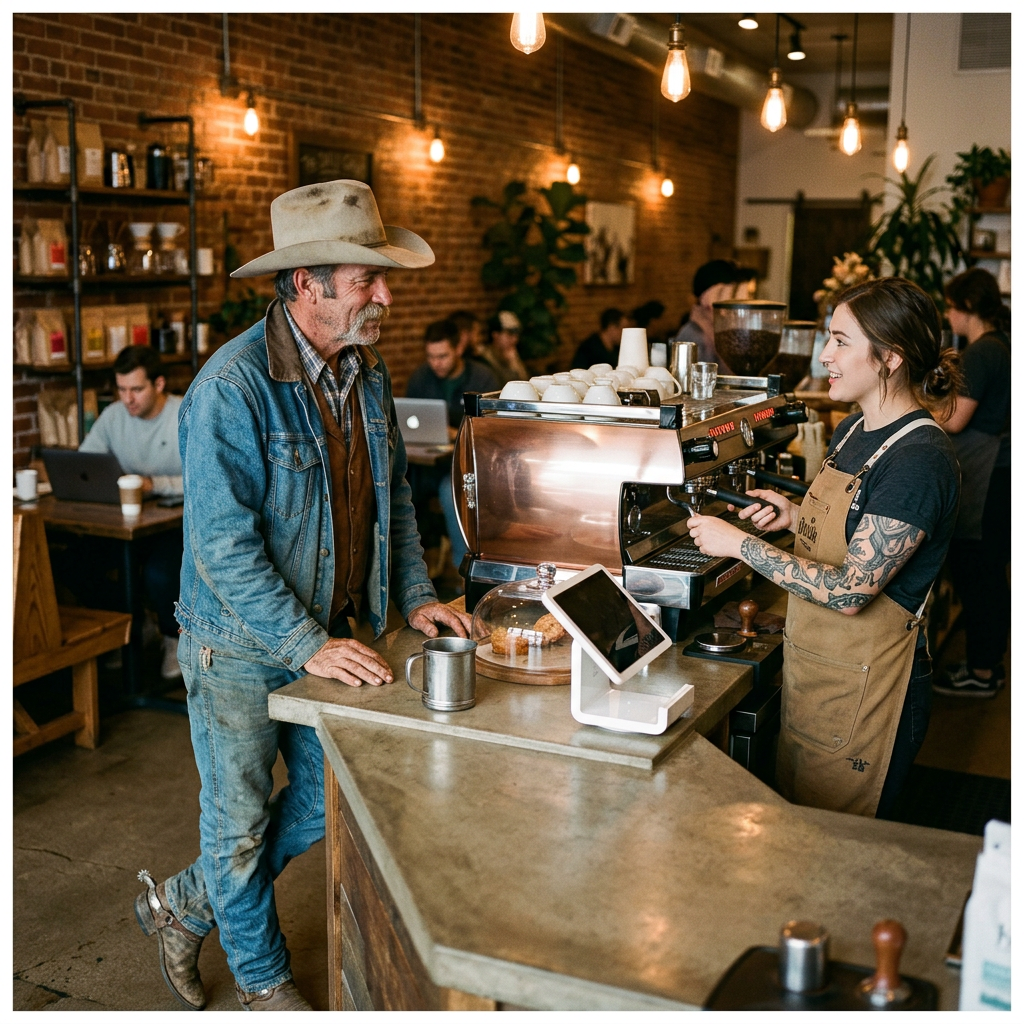
And it was social in a way that mattered in an isolated country. Gathering around the fire with a cup was how news traveled, how a crew of strangers turned into an outfit, how the day got planned. That’s not so different from what a coffee shop does now. The setting changed a lot more than the function did. Coffee has always been the thing Wyomingites gather around, whether the gathering point is a chuckwagon out on the Powder River or a booth on Main Street.
From the Fire to the Roastery
Fast-forward to today, and Wyoming has quietly grown a genuinely good independent coffee scene — one that I don’t think gets the credit it deserves from people who assume this is strictly a gas-station-drip kind of state. It absolutely is not.
Down in Laramie, Coal Creek Coffee has been the anchor for decades, and I’ve already given it the full write-up it deserves. But the reason I wanted to write this piece is that Coal Creek isn’t alone — not by a long shot. Drive across the state and you’ll find serious roasters in towns you might not expect.
In Sheridan, there’s Bison Union Coffee Company on North Main, a veteran-owned roastery that roasts its own beans onsite in small batches. As a veteran myself, I’ve got a real soft spot for that one — it’s the kind of place where the Wyoming pride and the coffee are equally sincere. Down in the capital, Snowy Elk Coffee Co. in Cheyenne roasts specialty-grade beans at around 6,000 feet of elevation and has pulled in medals at the Golden Bean Coffee Roaster Competition, the largest roasting competition in North America — no small thing for a shop that started small.
Head west and northwest and the thread keeps going. Cody Coffee is a family-owned artisan roaster working with fair-trade organic beans, right there in the gateway town to Yellowstone. Over in Lander, Balsamroot Roasters turns out ethically sourced, small-batch coffee roasted right in that Wind River mountain town. Here in my own Casper, the local coffee scene has grown up a lot in the years since Kimi and I landed here in 2022, and finding a good independent cup has gotten a whole lot easier.
What the Chuckwagon and the Roastery Have in Common
You might think craft coffee is the opposite of cowboy coffee — one obsessive and precise, the other rough and ready. But spend time with the people doing both and you notice they’re chasing the same thing.
The trail cook wanted coffee strong enough to matter, made honestly, that brought people together at the fire. The small-batch roaster in Sheridan or Lander wants beans roasted with care, made honestly, that bring people together at a table. The tools got a lot fancier. The values didn’t move an inch. Both are, at heart, about taking coffee seriously in a place that takes very little for granted. That throughline is why I don’t think of Wyoming’s coffee culture as having two separate chapters. It’s one long pour.
Brewing a Little Trail Coffee Yourself
If you want to taste this history directly, cowboy coffee is honestly the easiest brewing method there is, and you don’t need a campfire — a camp stove or even your kitchen burner works fine. You’ll want a proper enamelware camp coffee pot, which is the traditional vessel and costs next to nothing. Bring your water to a boil, pull it off the heat, add a heaping tablespoon of coarse grounds per cup, stir, cover, and let it sit four or five minutes before you settle the grounds with that cold-water splash.
The one upgrade I’d genuinely push you toward is grinding your own beans, because coarse, even grounds make a huge difference in how little grit ends up in your cup. A simple manual burr grinder gives you control the old cooks would have killed for, and it packs down easy for a real trip. Buy a bag of beans from one of the Wyoming roasters above if you can — it closes the loop nicely, drinking coffee roasted in the same country the cowboys once brewed it in.
The Same Cup, a Hundred Years Apart
That rough cup I made out past Casper wasn’t good coffee. But it connected me to something, and once I understood the history, every cup in this state started to feel a little more rooted. The cowboy at the chuckwagon and the roaster on Main Street are pouring from the same tradition, and I love that you can still taste both if you go looking.
So here’s what I want from you: go find a Wyoming roaster you haven’t tried, or better yet, boil up a pot of cowboy coffee on your next trip out and tell me it doesn’t taste like the place. Snap a photo and tag @wyofood on Instagram or Facebook — I want to see your pot, your fire, and your worst-looking, best-tasting cup. There’s a lot of good coffee in this state. Let’s go drink it.
— Sean