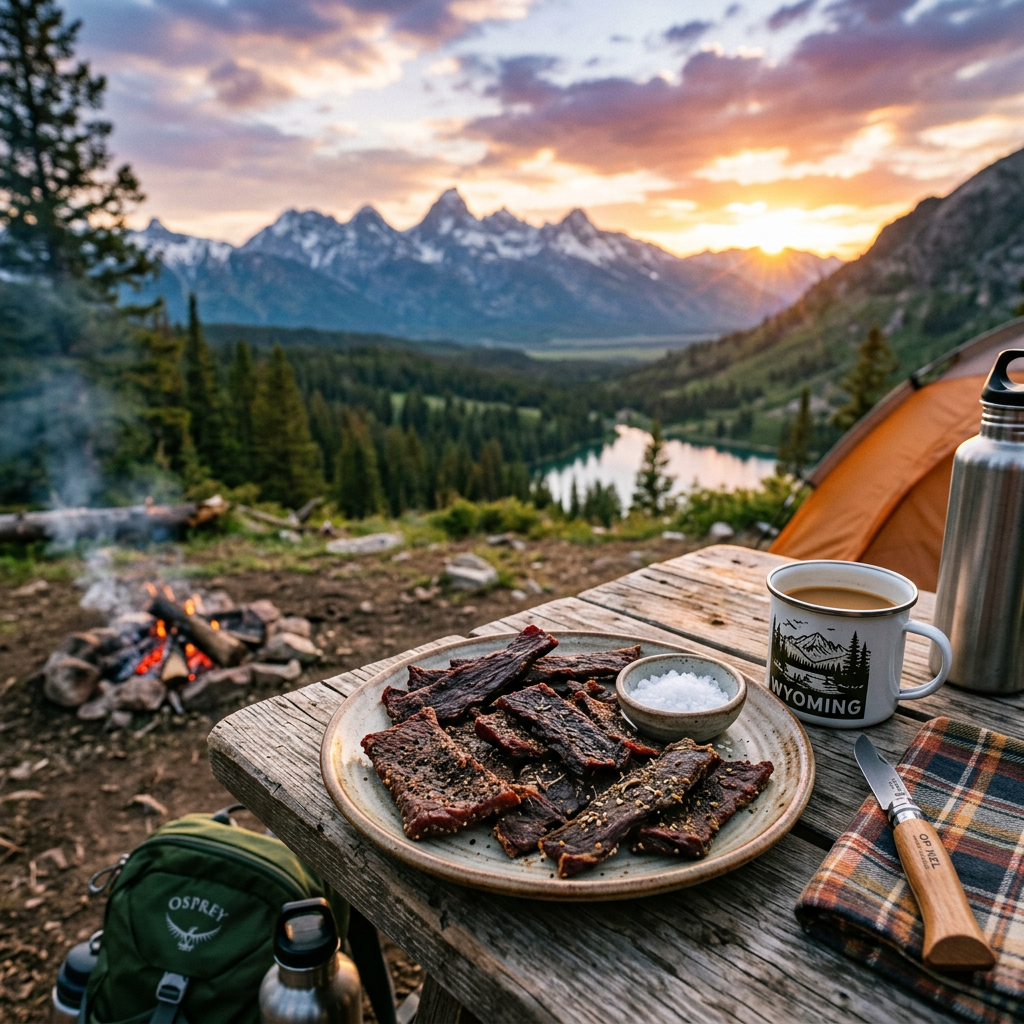
If there’s one animal that says “Wyoming” louder than any other, it’s the pronghorn. You see them everywhere out here — strung along the sagebrush flats, racing the fence line beside the highway, standing on a rise like they own the place. And they kind of do. Wyoming holds the largest pronghorn population in North America, more pronghorn than people in some counties. Every fall, thousands of us fill our tags, and that meat ends up in freezers all over the state.
I’ve cooked pronghorn just about every way you can. But the thing I make first, every single season, is jerky. It’s the best use of the animal I know — portable, shelf-stable, and absurdly satisfying to pull out of your pack on a cold October morning. This is my go-to pronghorn jerky recipe, the one I’ve been tweaking for years.
What Makes Pronghorn Special
Let’s talk about the meat, because pronghorn has a reputation — and most of it is unfair. People call antelope “goat” and swear it’s too gamey to eat. I’m here to tell you that’s almost always a field-care problem, not a meat problem.
Pronghorn is extremely lean, which is part of what makes it perfect for jerky. The flavor is distinct — it’s not venison, it’s not elk. It’s got its own thing going on: slightly gamey, a little wild, a touch of sage on the back end depending on what they’ve been eating. Done right, it’s clean and rich. Done wrong, well, that’s where the bad reputation comes from.
The two things that make great antelope jerky are the marinade and the dry. A good marinade cuts whatever gaminess is there and layers in depth — salt, smoke, sweetness. And a low, slow dry pulls the moisture without ever cooking the meat, which keeps the texture right. Master those two things and you’ll convert every skeptic who’s ever turned their nose up at pronghorn.
It Starts in the Field
I won’t turn this into a hunting tutorial, but I’d be lying if I said the kitchen is where good jerky begins. It starts the second the animal is down. Cool that meat as fast as you can — pronghorn are usually taken on warm early-season days, and heat is the enemy. Get the hide off, get air moving, get it on ice. Keep everything clean, mind the scent glands on the legs, and don’t let dirt or hair ride along on the meat. Ninety percent of “too gamey” gets solved right there in the field. If you want a fuller rundown on handling wild game from the field to the freezer, I cover it in my Wyoming wild game season guide.
Pronghorn Jerky Recipe
Yields: about 1 lb of finished jerky
From: 2 to 2.5 lbs of pronghorn (any lean muscle — hindquarter roasts are ideal)
Active time: 30 minutes · Marinate: overnight · Dry: 4–8 hours
Marinade
- 1/2 cup soy sauce
- 1/3 cup Worcestershire sauce
- 2 tsp liquid smoke
- 3 tbsp brown sugar
- 3 cloves garlic, minced (or 1 tbsp garlic powder)
- 1 tbsp onion powder
- 2 tsp coarse black pepper
- 1/2 to 1 tsp cayenne (to taste)
- 2 tbsp Wyoming whiskey, optional
Instructions
- Prep the meat. Trim off every bit of silver skin, fat, and connective tissue. Pronghorn fat doesn’t render well and goes rancid fast, so be ruthless. Pop the trimmed meat in the freezer for 45 minutes to an hour until it’s firm but not frozen solid — this makes slicing dramatically easier.
- Slice. Cut into strips about 1/4-inch thick. Slicing with the grain gives you chewy, pull-apart jerky. Slicing against the grain makes a more tender, snappable piece. I do half and half.
- Marinate. Whisk all marinade ingredients together until the sugar dissolves. Add the strips, toss to coat, seal in a zip-top bag. Refrigerate overnight, or at least 8 hours.
- Dry it. Pat strips dry with paper towels. Lay on dehydrator trays in a single layer, not touching. Run at 160°F. Start checking around the 4-hour mark — most batches take 4 to 6 hours.
- Know when it’s done. Good jerky bends and cracks but doesn’t snap clean in half. When you fold a cooled piece, it should show white fibers at the bend without breaking.
No dehydrator? Set your oven to its lowest temp (usually 170°F), prop the door open a couple inches with a wooden spoon, lay strips on racks set over baking sheets. Same doneness cues, roughly 3 to 5 hours.
If you make a lot of jerky, a dedicated food dehydrator pays for itself in a single season. A good jerky seasoning kit can also shortcut the spice mixing if you’d rather keep it simple.
Two Variations Worth Making
Teriyaki pronghorn. Swap the cayenne for 2 tablespoons of honey and 1 tablespoon of grated fresh ginger, and add a teaspoon of toasted sesame oil. Sweeter, stickier, a crowd favorite.
Spicy pronghorn. Bump the cayenne to a full teaspoon, add a tablespoon of red pepper flakes and a finely minced jalapeño. This is the bag that disappears first in my truck.
Storing Your Jerky
Properly dried pronghorn jerky keeps 1 to 2 weeks at room temperature in a zip-top bag, a month or more in the fridge. For anything longer, vacuum seal it — a vacuum sealer pushes shelf life to 6 months in the freezer with zero quality loss. Seal in small single-serving bags for easy grab-and-go.
The Whole Point: The Glovebox Bag
Here’s why I make this every October. Wyoming is a state you drive across. Casper to Jackson, Sheridan to Cheyenne, a two-track road to a trailhead you’ve been meaning to hit — there’s always a drive, and it’s always long and beautiful. And nothing beats reaching into the glovebox and pulling out a bag of jerky from an animal you took yourself, off ground you know by heart.
That’s the real magic of pronghorn jerky. You put in the work in the fall, and you eat the reward for months. It’s Wyoming in a bag. Once you’ve made your own, the gas-station stuff is ruined for you forever — and honestly, good riddance.
If you’ve got more pronghorn in the freezer and want to do something fancier with the prime cuts, don’t miss my backstrap with herb butter — the same technique sings on antelope. Now get out there and fill that tag.